
Panel vs closeboard fencing: which should you choose?
I fit both, so here's the honest version. Panels are the cheapest way to put a fence up. Closeboard (I call it featheredge, same thing) costs more but it's stronger, lasts far longer and looks better.
If you only read one line: if you want the fence to still be standing straight in 15 years, go featheredge.
The Quick Answer
Swipe the table to see all three →
| Featheredge (closeboard) | Budget panels | Heavy-duty panels | |
|---|---|---|---|
| Upfront cost | Higher than budget panels | Lowest | Close to featheredge |
| Lifespan (my experience) | 15–20 years when well built | Around 5 years | Much longer than budget panels |
| Strength | Strongest | Weakest | Good |
| Posts | Usually 4" | Usually 3" | Usually 3" |
| Post positions | Flexible | Fixed by panel width | Fixed by panel width |
| Gravel boards | Standard on my fences | Not usually fitted | Not usually fitted |
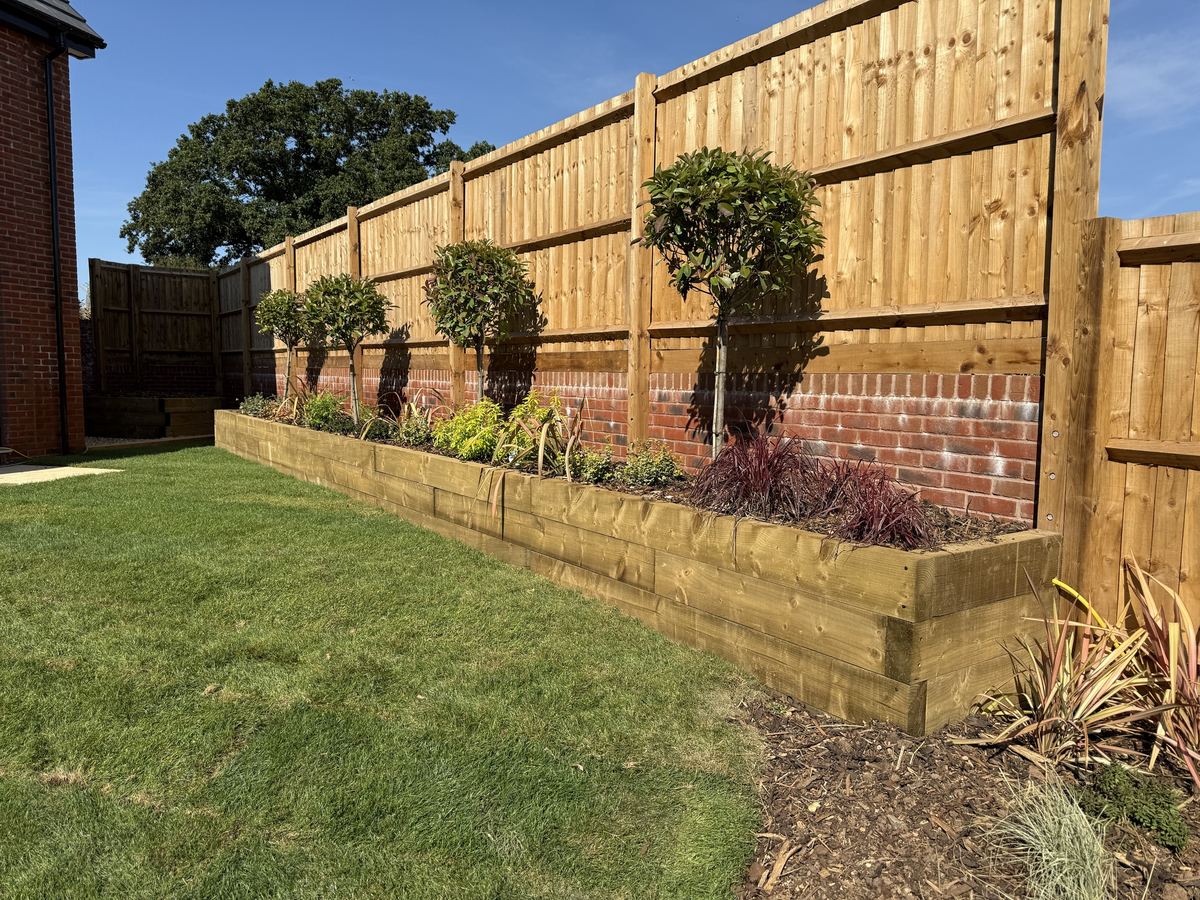
What's The Difference?
Panel fencing is made of pre-built panels, usually 6ft (1.83m) wide, that slot between posts. The posts have to sit exactly one panel-width apart.
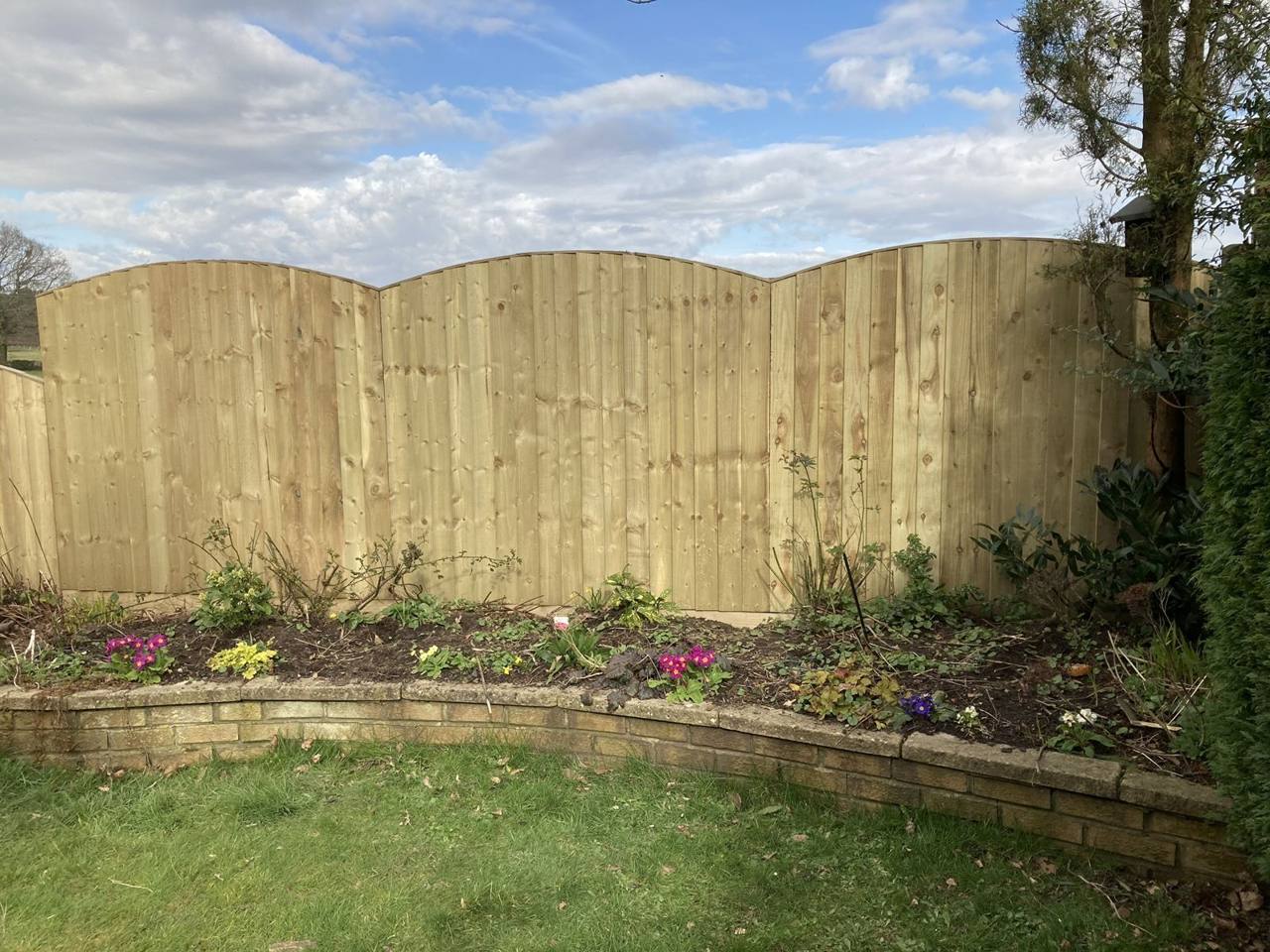
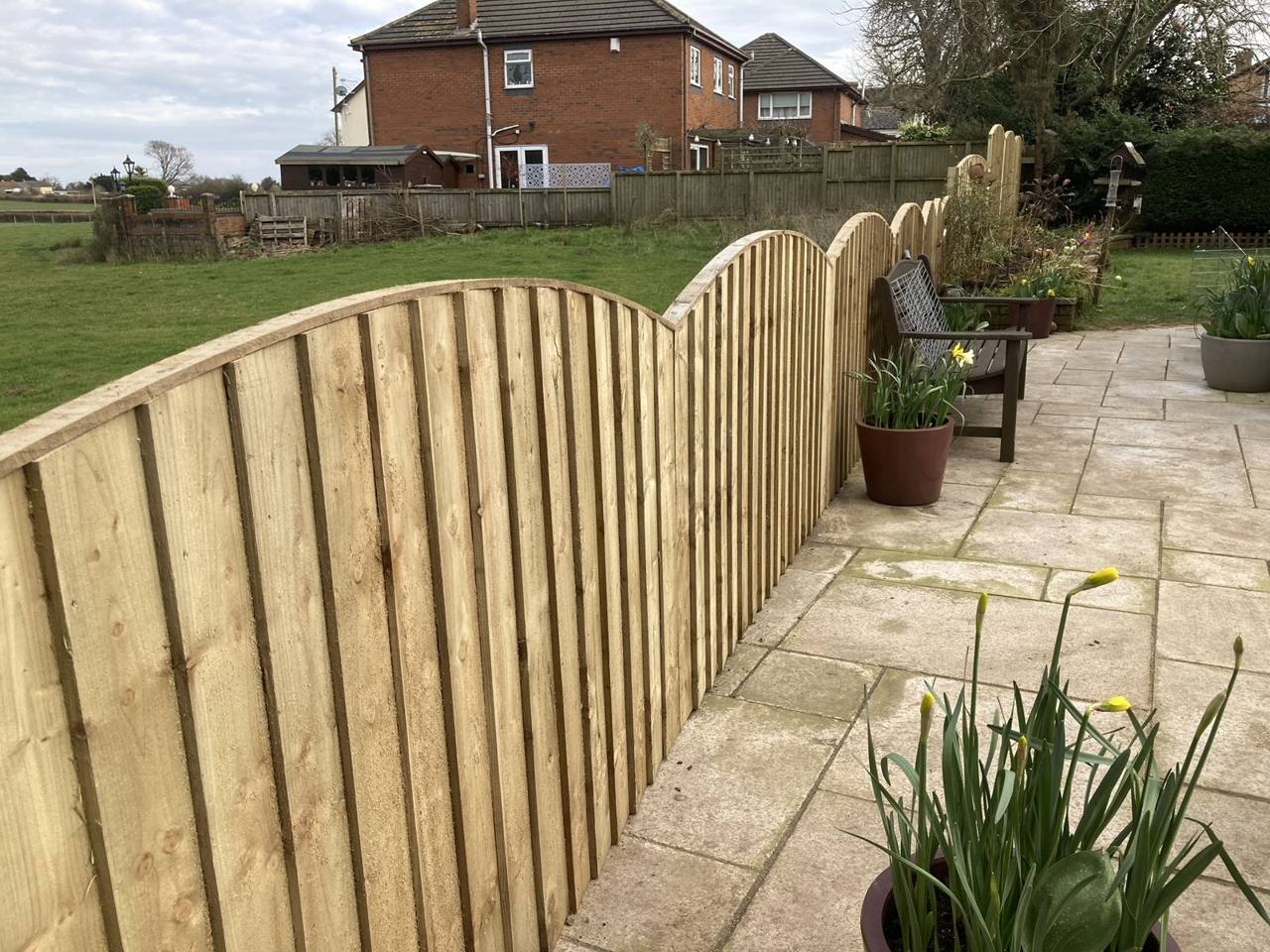
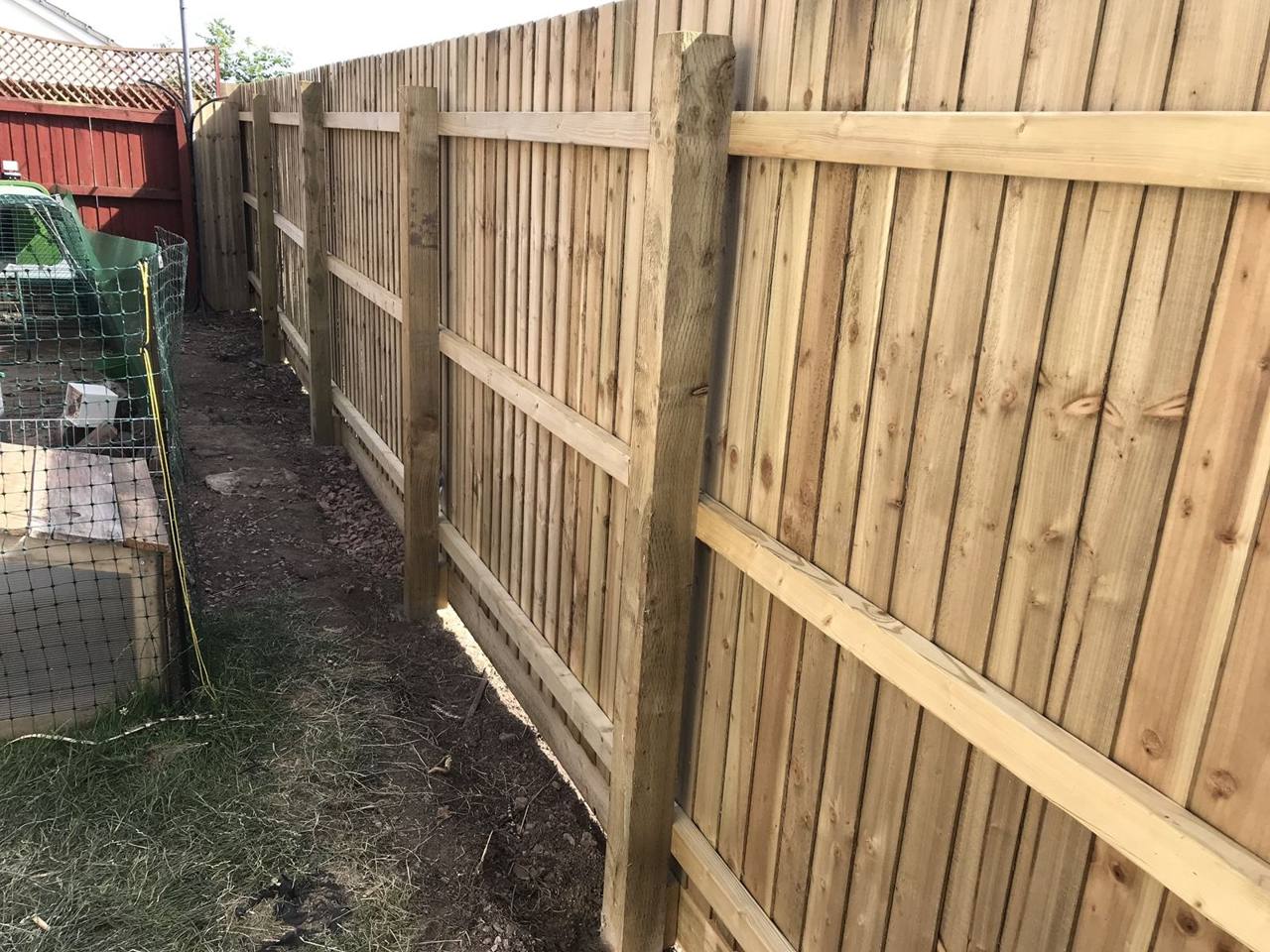
Closeboard / featheredge fencing is built on site. Posts go in, then horizontal rails (arris or cant rails) between them, then individual tapered featheredge boards are nailed to the rails, each one overlapping the last. Gravel boards run along the bottom.
Swipe to see the whole diagram →
A featheredge fence going up, start to finish
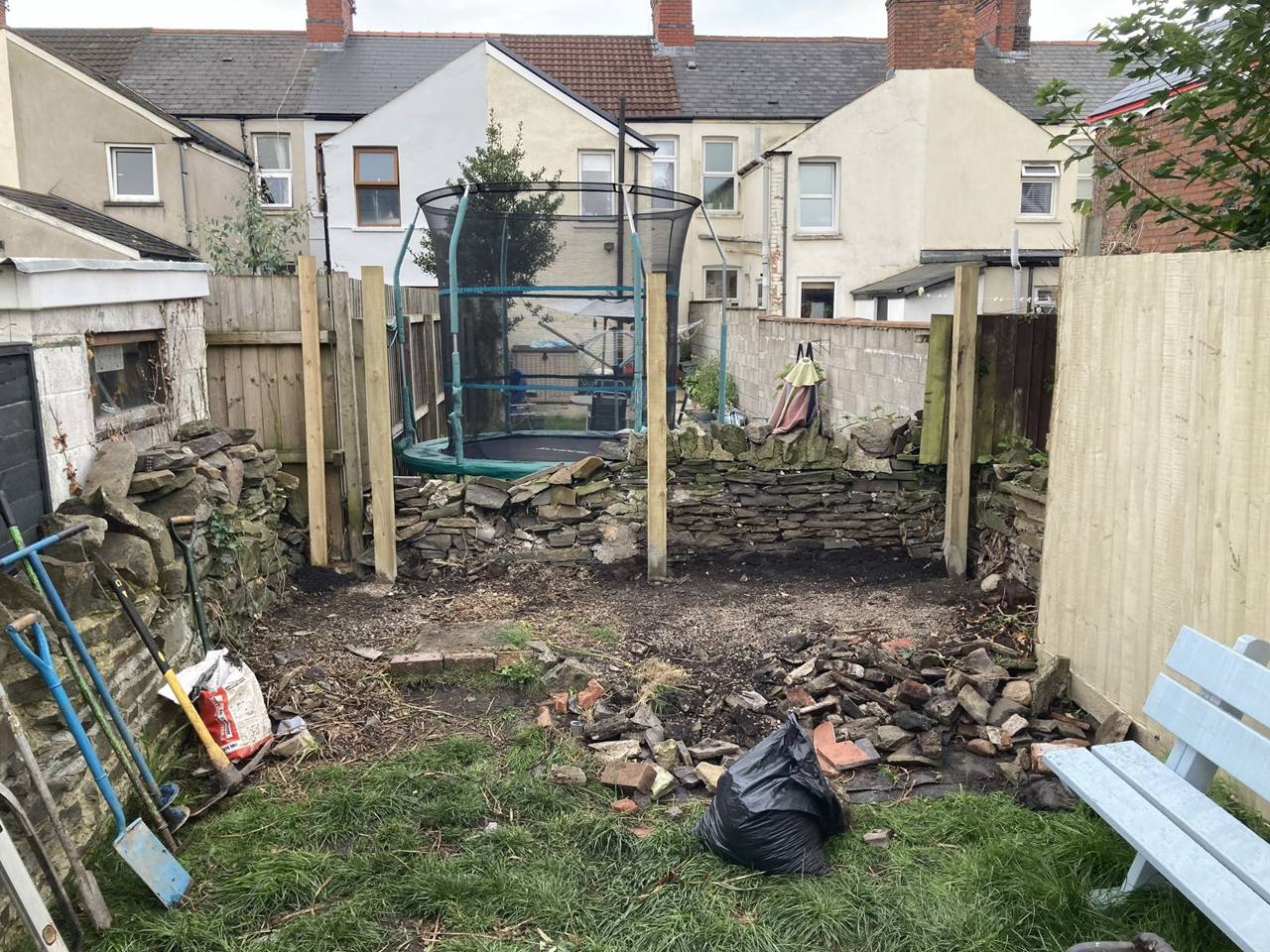 Posts in, set where the site needs them
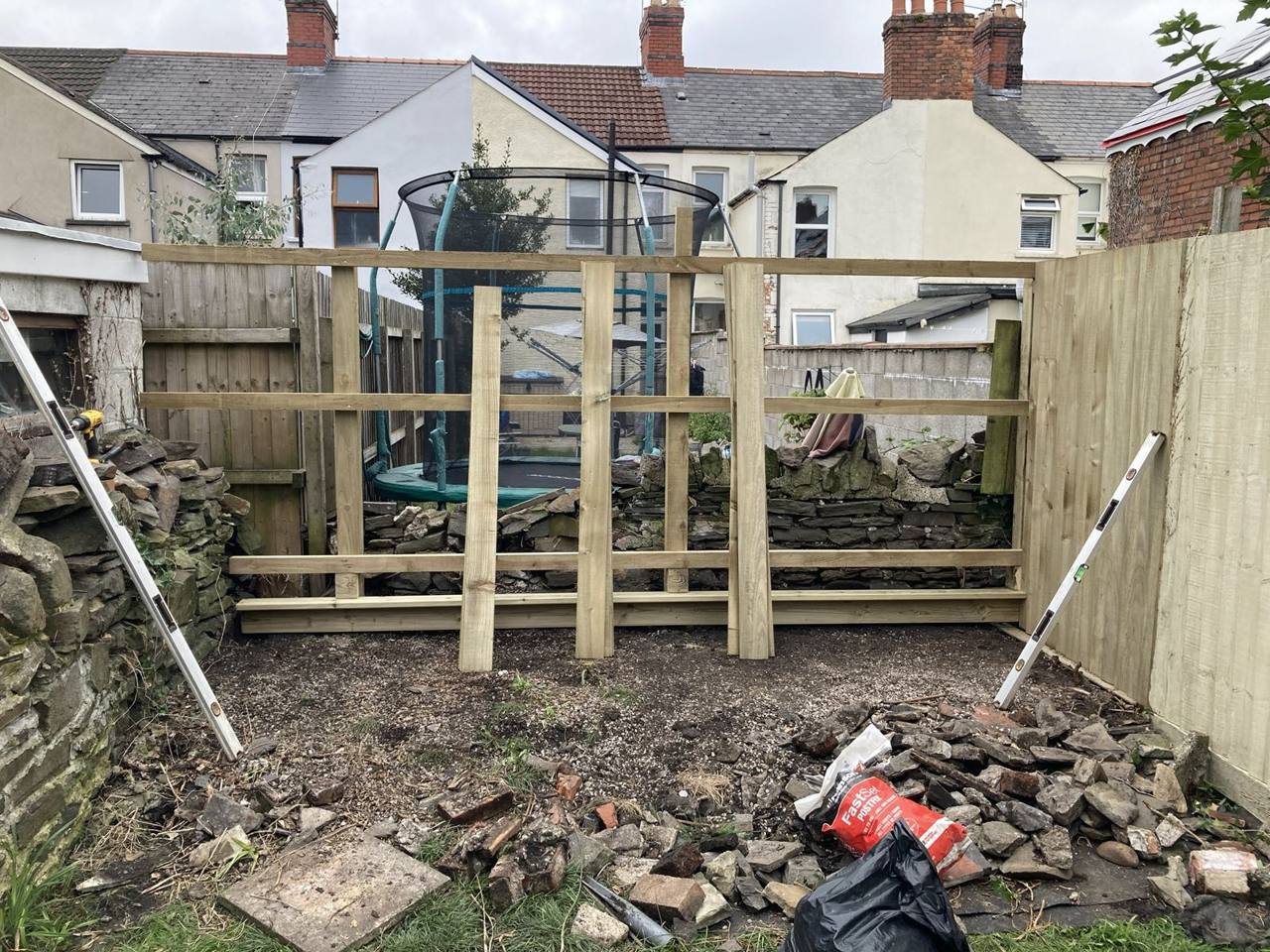 Rails fixed between the posts
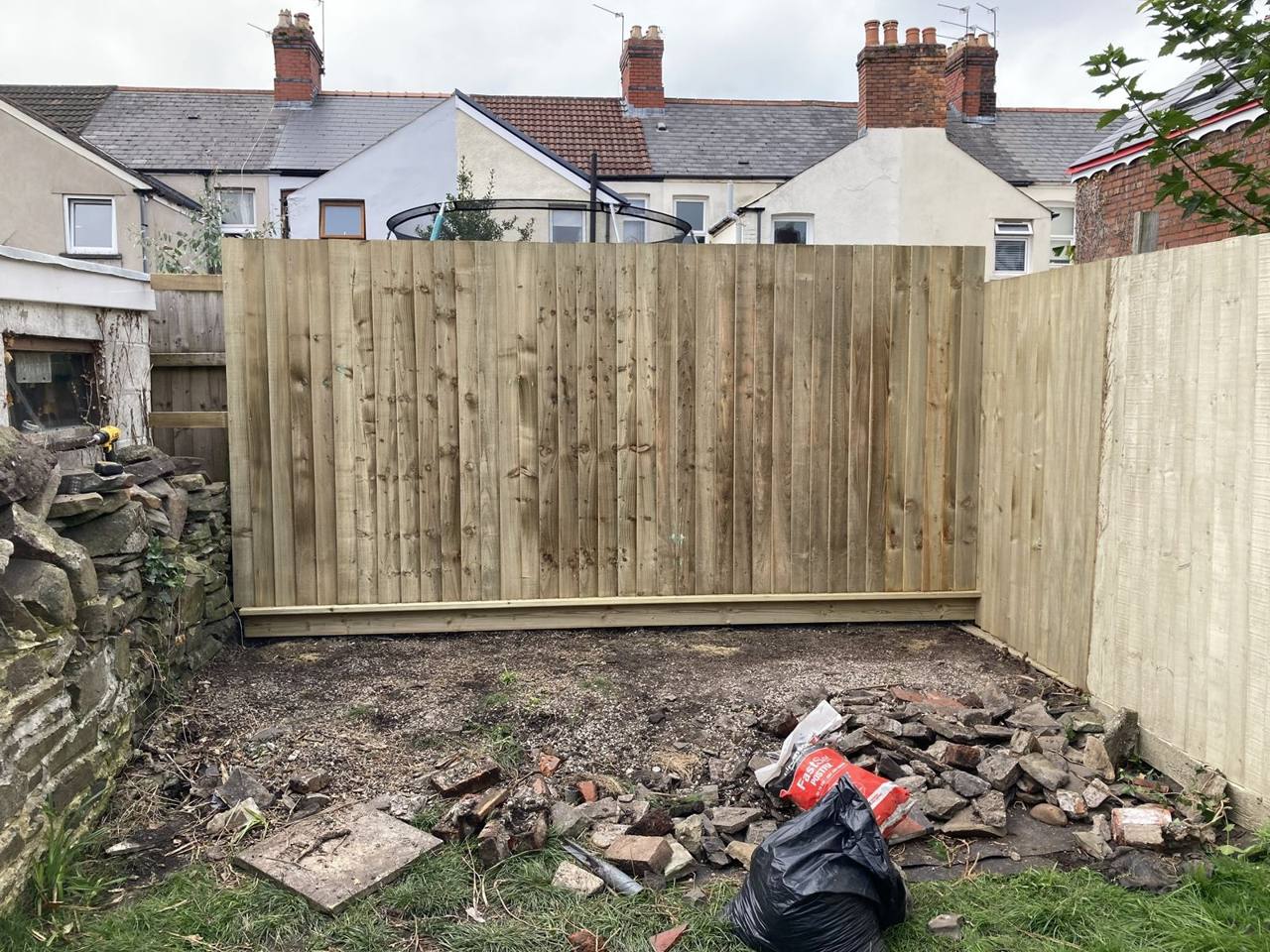 Boards on, each overlapping the last
And a panel fence done properly
Which Lasts Longer?
In my experience, budget lap or waney-edge panels last around five years, and less if they take a battering: kids kicking a football against them, strong wind, or anything leaning on them. Budget panels are held together with small pins or staples, and those lose their grip quickly as the seasons roll round: the timber swells in the wet, shrinks in the dry, and every cycle works the fixings a bit looser. Before long the slats rattle, split or drop out, and the frame starts to come apart.
You can buy heavy-duty panels, and they're pretty good. But by the time you've paid for them, most of the cost advantage over featheredge has gone.
A well-built featheredge fence will do 15 to 20 years without much trouble. Each board is fixed individually to rails that are fixed to the posts, so there's nothing to rattle loose.
Which is stronger in the wind?
Featheredge. A panel is a sail held in by a few fixings at each post. When those go, the whole panel goes. A featheredge fence is one continuous structure: rails into posts, boards into rails. Strong winds are when panel fences come down; featheredge fences mostly stay put.
The posts matter just as much. As a general rule, panel fences go up on 3" posts, while featheredge is usually built on 4" posts, which are much stiffer. And I dig every post hole 600mm deep as standard, whatever the fence, so a good length of post is in the ground. That's what keeps the fence solid when the wind gets up or something leans on it.
Replacing A Fence: The Bit Nobody Tells You
This is one of the main reasons I prefer featheredge.
With panels, the posts have to go back in exactly the same spots, because the panels are a fixed width. That usually means digging out the old concrete post feet, which is slow, hard work and adds time to the job.
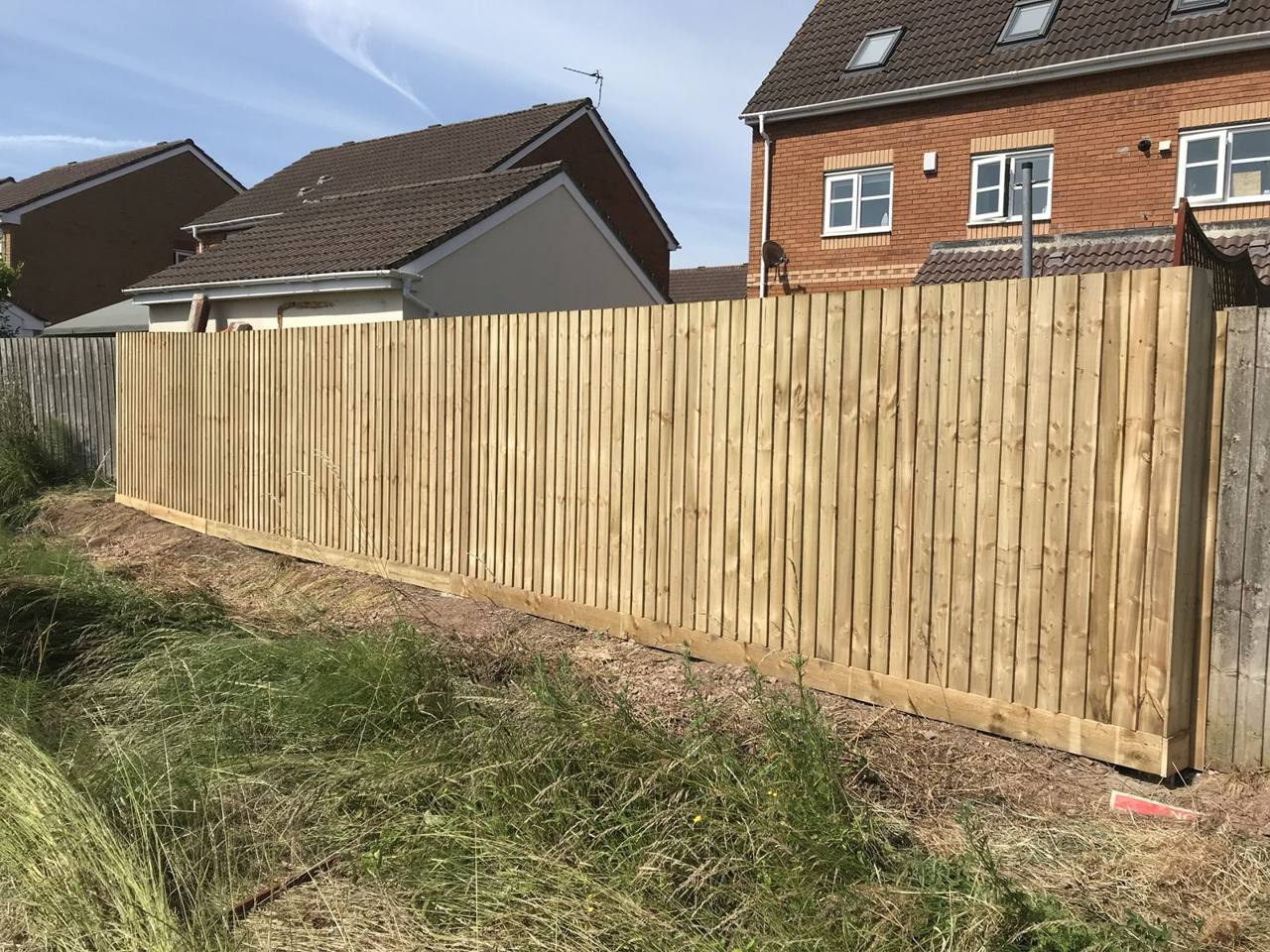
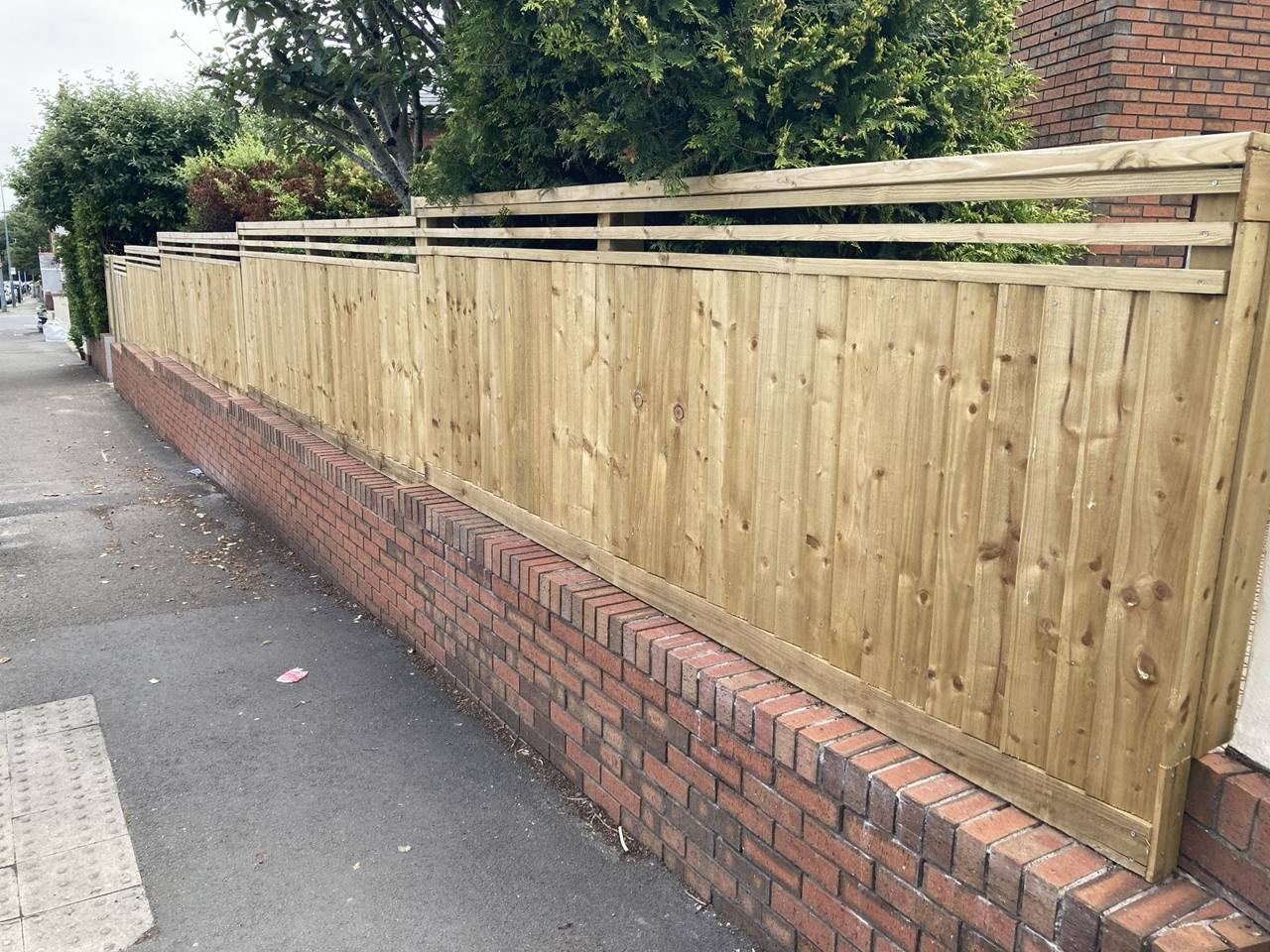
With featheredge, I just shift each post a little to the left or right. The old concrete stays in the ground, out of sight, and the new posts go in fresh holes. The same flexibility means I can work around trees, roots, drains, walls and awkward boundaries, and follow slopes and steps far more neatly than panels can.
Swipe to see the whole diagram →
Timber Or Concrete Posts?
I use timber posts, set in concrete with a haunch. Concrete posts are very long-lasting and that's their big selling point. But they're heavy and awkward to handle, and to my eye they don't look nice in a garden.
Timber posts are my choice. They're the more environmentally friendly option and they look right with a timber fence. The weak spot of any timber post is where it meets the ground, and that's where most fencers cut corners.
My Haunch Method
Every post goes into a 600mm-deep hole. When I concrete it in, I build the concrete up above ground level into a sloped shoulder (a haunch) around the base. Rain runs off it and away from the post instead of sitting around the timber.
That's what stops posts rotting at the base five or ten years down the line. It's a step a lot of fencers skip, and it's one of the main reasons my fences last.
Swipe to see the whole diagram →
Do You Need Gravel Boards?
On my featheredge fences, gravel boards come as standard. They sit along the bottom so the fence boards never touch the soil, and if one rots it's a quick, cheap swap.
Panel fences don't usually come with them, but adding gravel boards to a panel fence does help it last longer, because the panel isn't sitting in wet ground.
Can You Repair A Fence?
Replacing a panel is, in theory, very easy: slide the old one out, slide a new one in, provided the fence was built properly in the first place. If the posts have moved, it's not so simple.
Featheredge is just as easy to repair. A damaged board or a section can be replaced on its own and, once it weathers (or gets a coat of paint or stain), it blends straight in. If a post rots at the base, I set a new post right beside it, leave the old concrete in the ground and fix the rails to the new post. It's a classic featheredge repair.
Which Side Faces The Neighbour?
There's no law that says which way round a fence has to go. The usual courtesy is to put the smooth face (boards) towards the neighbour and keep the posts and rails on your side, so you can reach them for maintenance.
Rails on the inside have two other benefits. They're better for security, because there's no ladder of rails on the outside for anyone to climb. And they give you a ready-made frame for growing climbers.
It's worth agreeing with your neighbour before the work starts.
Do You Need Planning Permission?
Usually not. Under permitted development you can normally put up a fence without planning permission if it's:
- no more than 2 metres high, or
- no more than 1 metre high where it's next to a road used by vehicles (or the footpath of one).
You will need permission if the property is listed or next to a listed building, or if your council has removed these rights (an Article 4 direction or a planning condition), which is more common in conservation areas. If a fence sits on top of a wall, the height is usually measured as the two together. If you're not sure, check with your council before the work starts; I'm happy to talk it through on the quote visit.
Gates Built To Match
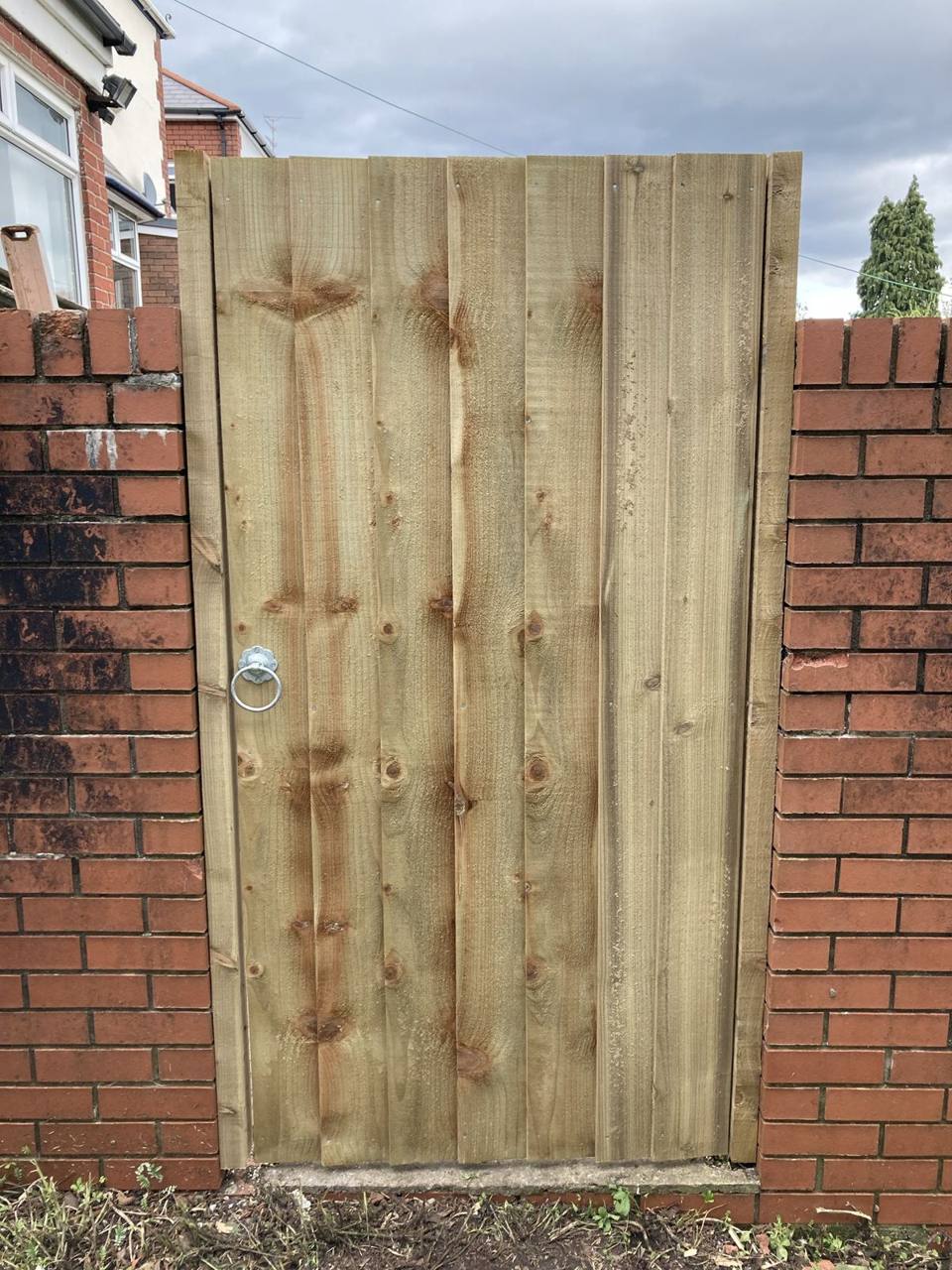
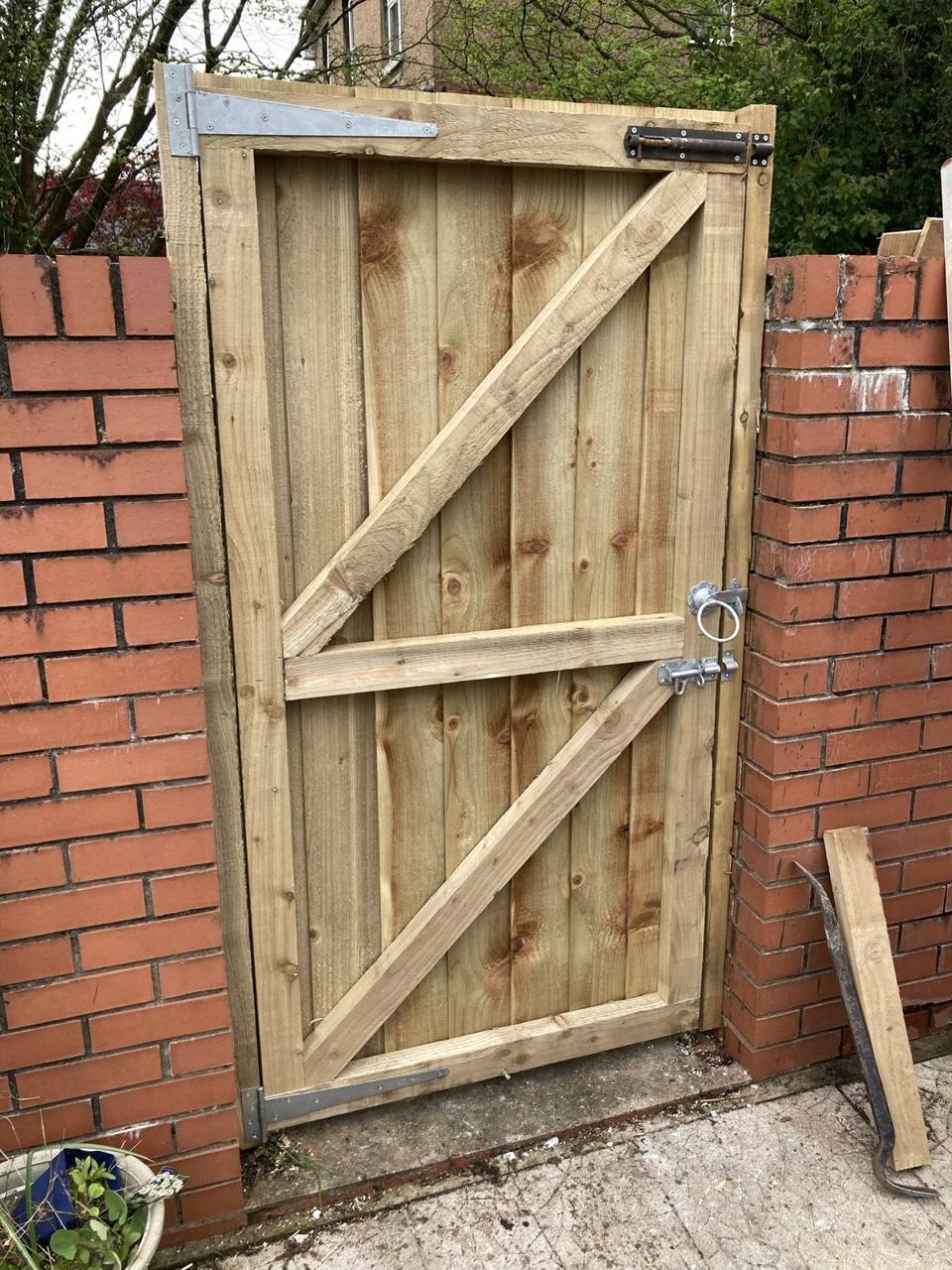
I make gates from scratch to fit any gap, standard size or not. They're built from the same boards as the fence, ledged and braced on the back so they stay square and don't drop, and hung on heavy hinges.
Fencing FAQ
Straight answers. If yours isn't here, call or WhatsApp.
Thinking About
A New Fence?
Call or WhatsApp and I'll come and look at it. 12-month workmanship guarantee. Public liability insured.