
Composite decking: a builder's guide
Composite or timber is mostly a budget decision. Good composite costs four times as much as timber or more, but it needs very little upkeep: a good wash once or twice a year.
This guide covers what to look for in a board, why the frame underneath matters as much as the boards on top, and how to look after it.
Is Composite Decking Better Than Timber?
Neither is better for everyone. For most people it comes down to budget. Timber costs much less up front and is real wood, but it needs oiling every year. Composite costs much more and needs very little looking after.
Swipe the table to see both →
| Composite | Timber | |
|---|---|---|
| Up-front cost | Four times as much as timber or more; some is very expensive | Much lower |
| Upkeep | A wash once or twice a year | Oil once a year |
| Lifespan | Backed by manufacturer warranties (25 years on Millboard for homes) | 15–20 years, built well and oiled yearly |
| Look | Quality varies a lot between brands | Real wood, weathers naturally |
| Grip | Tends to grip better than timber | Good if cleaned and oiled |
| Heat | Gets hotter in full sun, especially darker boards | Stays cooler |
| Repairs | Harder to replace a single board | Easy, board by board |
Sometimes there's a specific reason to choose one. Some customers choose composite for the finish alone. On one architect-designed house, the brief was simply the best boards available, chosen to match the quality of the building.
What Should You Look For In Composite Decking Boards?
Look closely at the fixing system and the grain. I'll fit any brand, and some budget boards are fine if that's what you want, but with composite you do get what you pay for.
Two of the worst things I've seen:
- A poor fixing system that leaves too big a gap between the boards.
- Repetitive grain: the same pattern repeating with very little variation from board to board.
Good boards also resist UV fading, and some, like Millboard, resist algae as well.
Why Do You Recommend Millboard?
If a customer asks what I'd put in my own garden, the answer is Millboard.
Millboard boards are hand-moulded from real oak timbers, so they carry the texture and grain of real wood. They're made from a resin mineral composite with a Lastane® surface, which Millboard says grips well even in the wet.
Millboard also says the boards are highly resistant to stains, scratches, algae and UV fading. Millboard's own guide
Does Composite Decking Need A Special Frame?
For the best finish, yes. Composite boards are made to a very fine tolerance, and a composite frame is made to the same standard, so the finished deck looks perfectly even. Timber isn't made to that tolerance, so on a timber frame the finished deck can look just slightly out.
I can build a timber frame under composite if you'd prefer. It works, but it isn't best practice. Getting a perfect finish on timber takes a lot longer, and it can still show.
I follow the board manufacturer's spec for the frame. Where they don't give one, I set the joists at 400mm centres.
How Much Maintenance Does Composite Decking Need?
Very little. A good wash once or twice a year, about a day's work, keeps it looking right. There's no oiling and no treating.
You can pressure wash most good boards, but follow the manufacturer's care guide for the pressure and nozzle, because some boards shouldn't be pressure washed at all.
Is Composite Decking Slippery?
Composite tends to grip better than timber. I also lay the boards so you walk across the grain, not along it. When you step out of the door onto the deck, your foot lands across the boards. That gives good grip and a bit more safety.
Does composite decking get hot?
Yes. It gets hotter than timber in full sun, especially darker boards. On a south-facing deck, it's worth thinking about colour.
A recent composite job
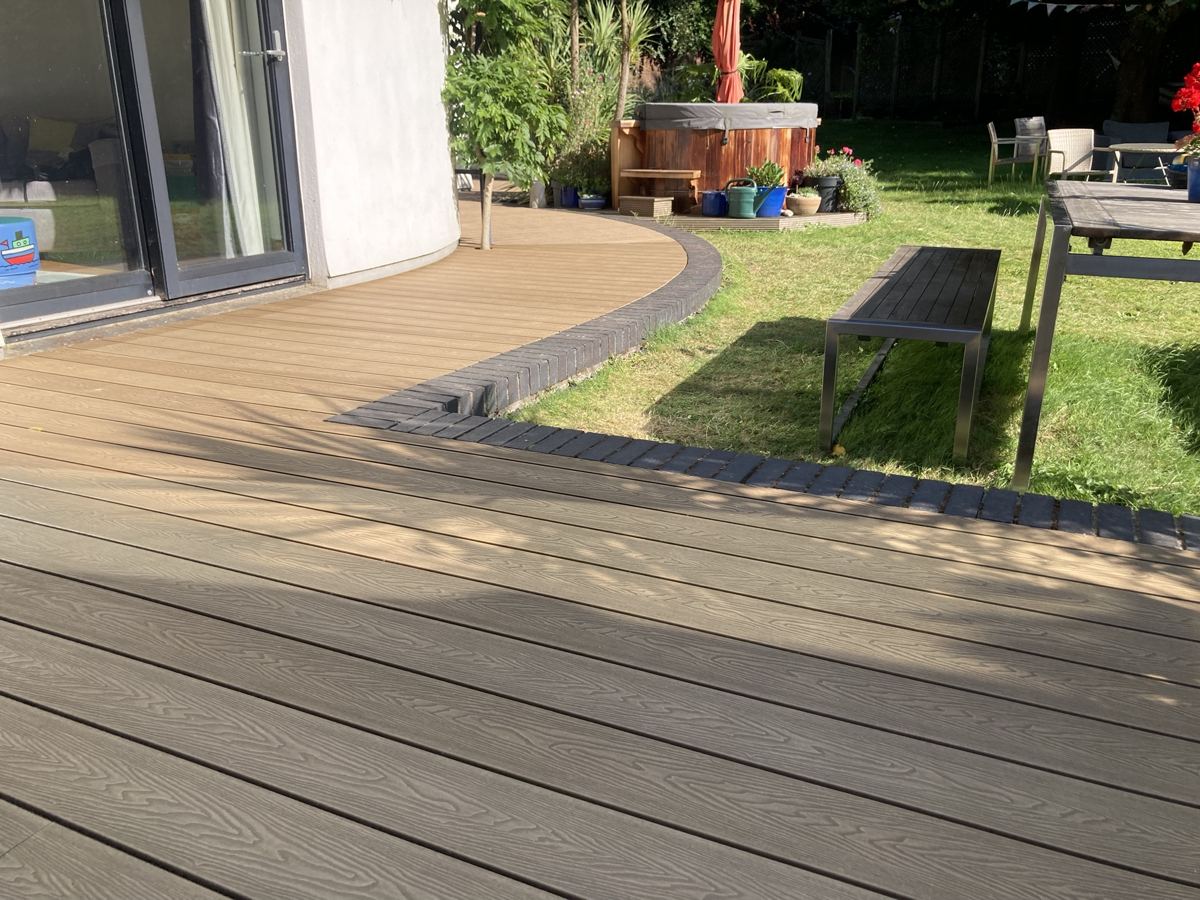
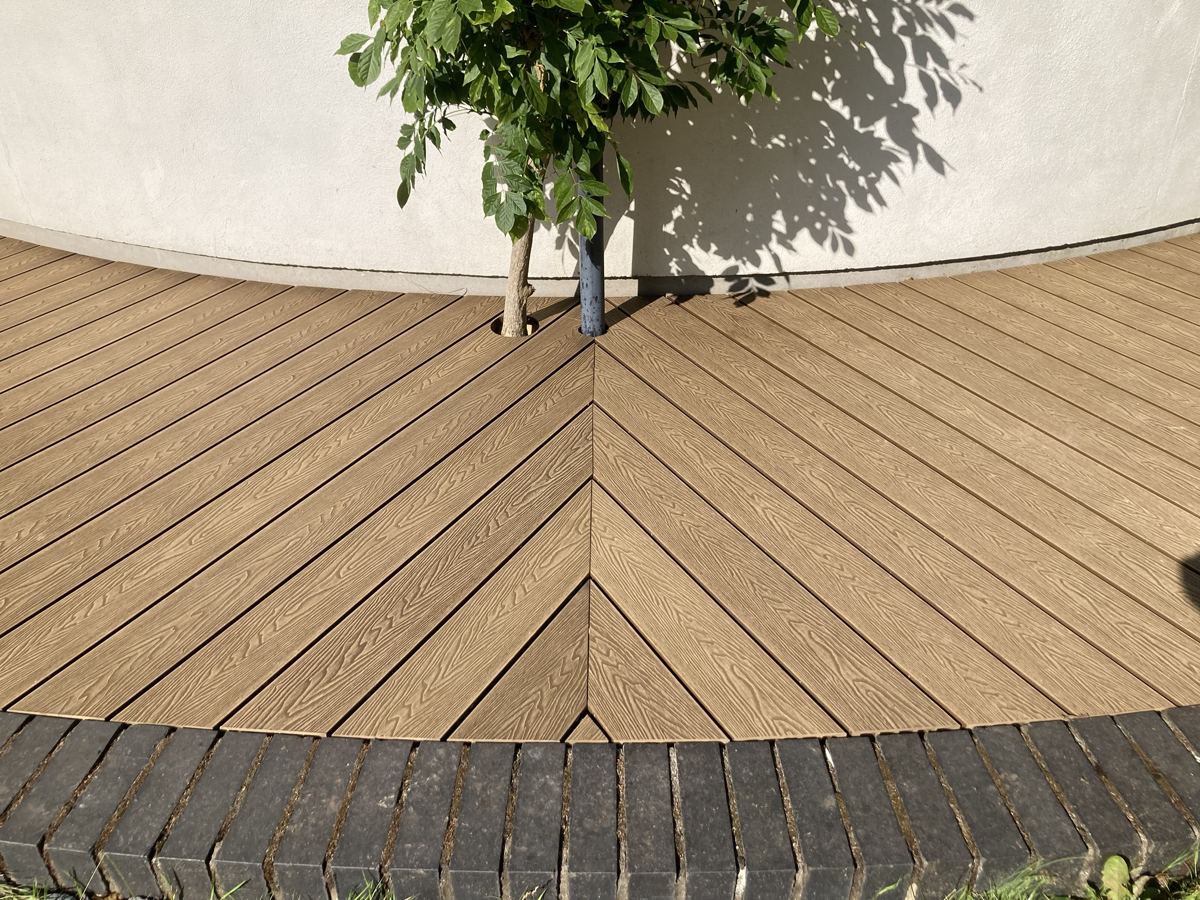
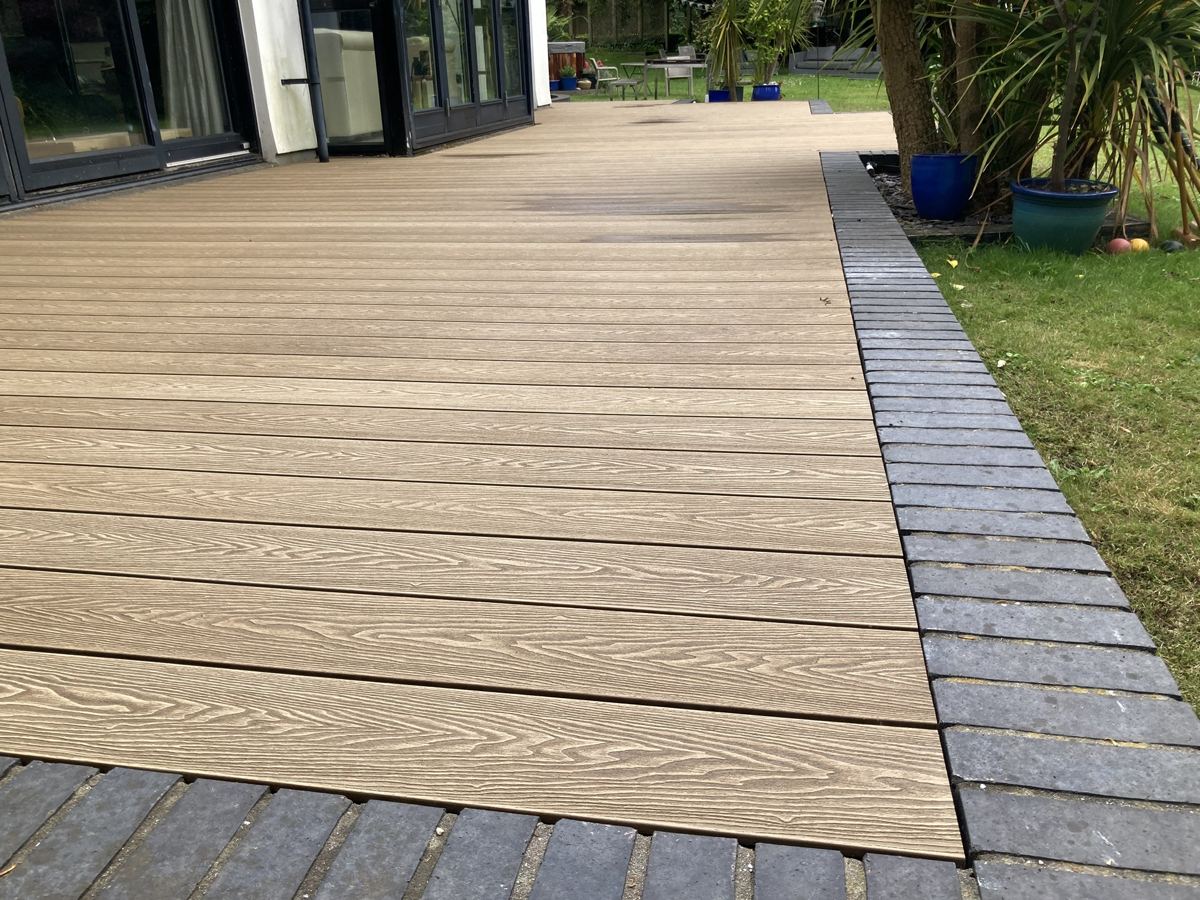
An old timber deck replaced with composite boards. The two decks run around the house at 90° to each other and meet in a herringbone joint. Getting that joint perfect took two or three attempts.
“So impressed with Darren at Dragonfly Woodcraft. He replaced our enormous decking and the subframe with great skill and intelligence. Clearly a perfectionist who is committed to giving good service. We can recommend him without reservation.”
Composite Decking FAQ
Straight answers. If yours isn't here, WhatsApp me.
Thinking About
A Composite Deck?
WhatsApp me a photo of your garden and I'll tell you what's possible. 12-month workmanship guarantee. Public liability insured.